2026 E-commerce is Here: 5 Ways Generative AI Just Changed the Rules
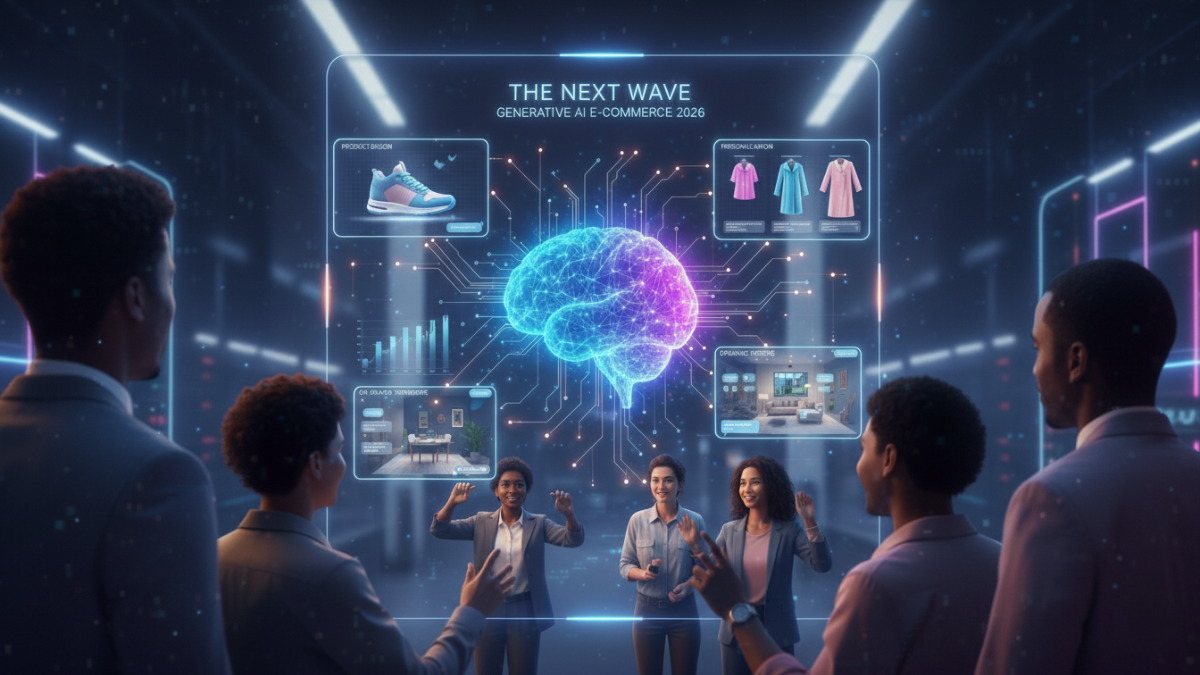
Introduction: The E-commerce Evolution Goes Generative
The landscape of online shopping is perpetually shifting, but the coming years promise not just an upgrade, but a revolution. We’re standing at the precipice of the next wave of digital retail, one powered almost entirely by Generative AI.
For years, e-commerce used AI for predictive tasks: What product will this customer buy next? Today, Generative AI flips the script. It’s the technology that can create new content, new interactions, and even new products. Think ChatGPT, Midjourney, and similar models, but deeply integrated into every facet of the shopping journey. By 2026, this shift will be non-negotiable for retailers looking to survive and thrive.
The companies that embrace Generative AI in e-commerce now are the ones who will define the future of AI retail. It’s time to move beyond basic chatbots and static product pages. Here are the five most significant ways this incredible technology is set to transform your online shopping experience.
1. Hyper-Personalized Shopping Experiences, Engineered by AI
Generative AI will take personalization from suggesting a product to crafting a truly unique and dynamic storefront for every single visitor.
No two customers are the same, so why should their shopping experience be? Using real-time data on browsing behavior, purchase history, and even stated preferences, Generative AI models can dynamically restructure a website layout, write custom headlines, and select optimal imagery to match an individual’s unique style and emotional state.
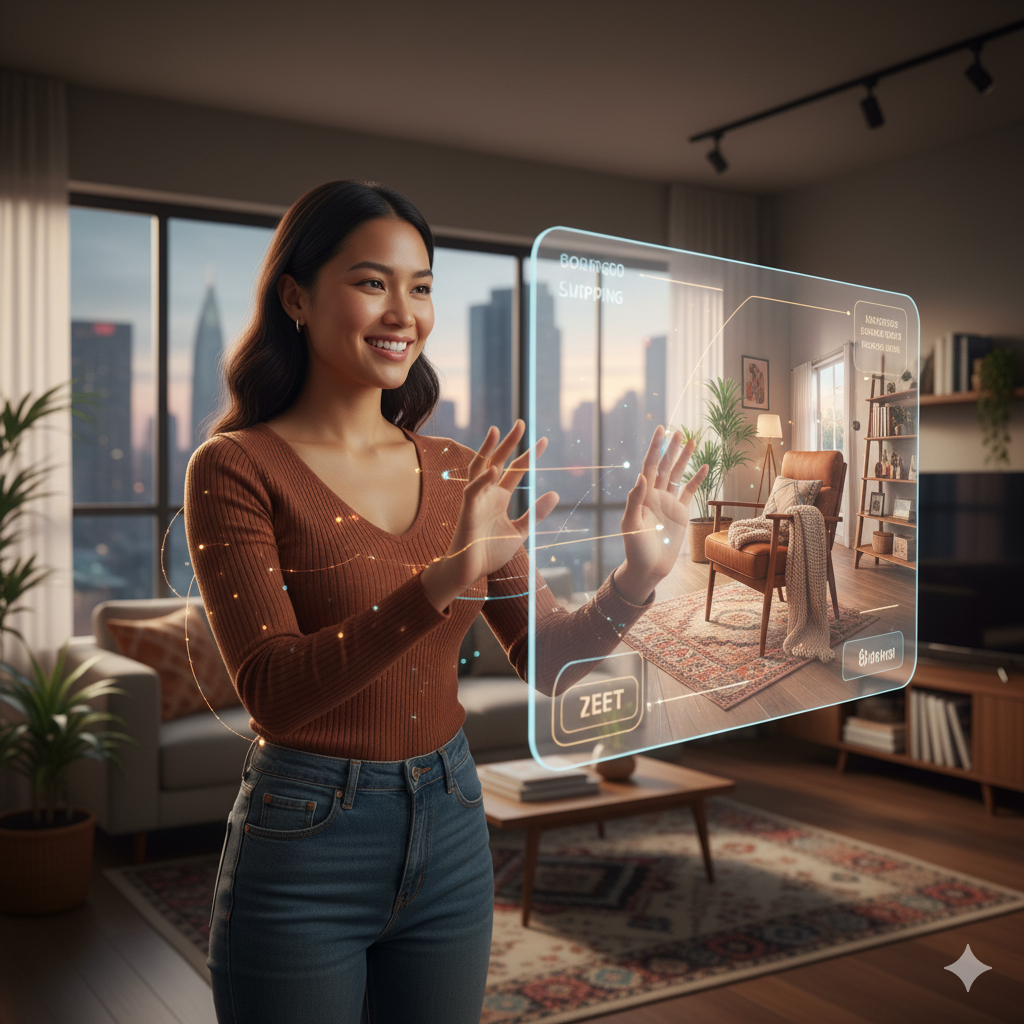
Real-life Example: Imagine a customer browsing for a new sofa. Instead of a generic product page, the AI instantly renders the sofa in a virtual living room that matches the customer’s own aesthetic—minimalist, bohemian, or mid-century—based on their historical data. Tools that generate AI-driven personalization will soon move past simple product recommendations and start generating fully customized Generative AI in e-commerce storefronts, resulting in far higher conversion rates.
2. Instant, Human-Like Customer Service and Support
The clunky, rule-based chatbots of yesterday are fading fast. By 2026, Generative AI will power conversational interfaces that are virtually indistinguishable from a highly trained human agent—available 24/7.
These sophisticated chatbots won’t just follow a script; they will understand nuance, emotional tone, and intent. They can instantly synthesize information from thousands of customer reviews, product manuals, and internal documents to provide complex, context-aware solutions. Furthermore, they can generate natural language responses that build genuine rapport.
Upcoming Examples: An e-commerce customer is frustrated about a shipping delay. The Generative AI assistant not only provides the tracking update but also proactively suggests a small discount on their next purchase or generates a personalized apology note, all without human intervention. This shift redefines customer service from a cost center to a seamless, loyalty-building engagement tool, setting a major benchmark for AI trends 2026.
3. Product Content Creation at Hyperscale
The sheer volume of content needed to run a successful e-commerce operation—product descriptions, social media captions, email subject lines, and ad copy—is staggering. Generative AI is the solution to this content bottleneck.
These tools can generate thousands of unique, high-quality, and SEO-optimized product descriptions in minutes, tailored for different platforms (e.g., short and punchy for Instagram, detailed for a website). It allows retailers to dramatically expand their product catalogs without the corresponding increase in content creation costs.
Real-life Example: A fashion retailer uploads an image of a new dress. The Generative AI instantly creates five distinct descriptions: one focusing on the sustainable materials, one highlighting the vibrant color, one tailored for a luxury audience, and two different ad variations. It’s not just speed; it’s the ability to target multiple customer segments simultaneously, making this a pivotal aspect of the future of AI retail.
4. Dynamic and Predictive Pricing Strategies
Forget static pricing models that require daily manual adjustments. Generative AI is enabling the most agile form of dynamic pricing the market has ever seen.
These models consume colossal amounts of real-time data—competitor prices, inventory levels, weather patterns, local events, social media sentiment, and more—and use it to predict the optimal price for every product, every hour. The difference with Generative AI is its ability to simulate market reactions to different price points, effectively running millions of hypothetical scenarios simultaneously to find the profit-maximizing strategy.
Upcoming Examples: During a sudden, unseasonal heatwave, an AI model identifies a spike in demand for portable fans in a specific metropolitan area. It slightly adjusts the price upward in that region while simultaneously generating a localized promotional email campaign for complementary products (like hydration packs), all without a human analyst lifting a finger. This precision is what makes this a game-changer in AI trends 2026.
5. On-Demand Product Design and Virtual Prototyping
The design process itself is moving into the AI’s domain. Generative AI allows for rapid and responsive product design, effectively bridging the gap between customer demand and inventory.
By analyzing trends and sales data, AI can suggest entirely new product variations or even design concepts that fit emerging market gaps. Furthermore, the technology is fundamental to advanced virtual try-on and customization tools, giving customers a digital-first experience of a physical product.
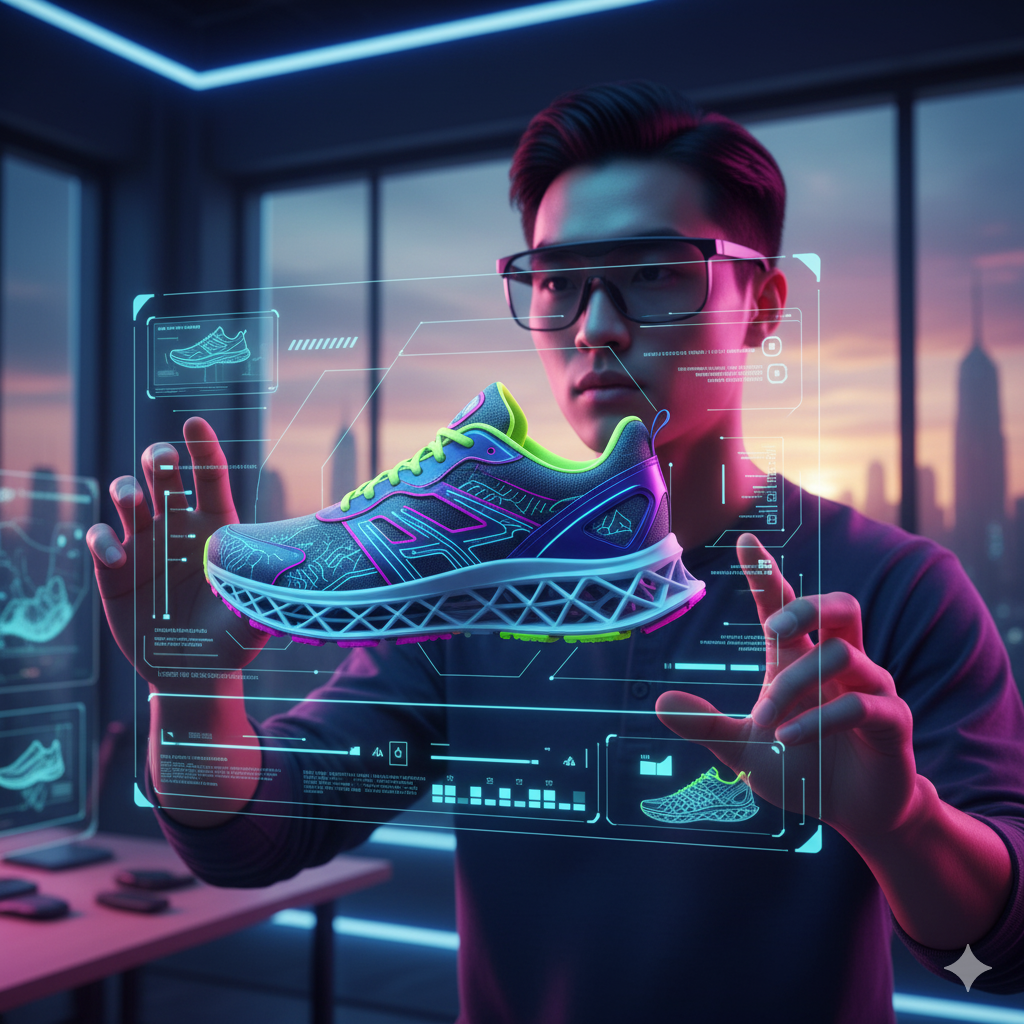
Real-life Example: A user on a shoe manufacturer’s website asks the AI, “Design me a running shoe that is comfortable for long distances, uses recycled plastic, and is styled like 1990s streetwear.” The Generative AI doesn’t just pull up existing options; it generates a brand-new 3D render of a potential shoe based on those parameters, allowing the customer to virtually ‘try it on’ immediately and even commission the one-off design. This is the ultimate expression of Generative AI in e-commerce.
Future Outlook: The Autonomous Retailer
By 2026, the convergence of these five points will create the truly autonomous retailer. Many operational tasks—from content generation to customer resolution—will be handled by AI systems. Human employees will be elevated from executioners to strategists, focusing on high-level decisions and managing the sophisticated AI ecosystem.
The core challenge for businesses will be integrating these disparate AI tools into a coherent, ethical, and secure platform. Retailers who successfully harness this technology will offer customer experiences that are personalized, instant, and consistently delightful, solidifying their dominance in the future of AI retail.
Key Takeaway 🔑Generative AI is shifting e-commerce from a predictive model to a creative, generative one. The change by 2026 will be defined by hyper-personalization, on-demand content creation, and instant, human-like customer service. Retailers must invest now to build the autonomous, AI-driven operations that will define the future of AI retail.
Now It’s Your Turn!
Which of these five Generative AI shifts do you think will have the biggest impact on your online shopping experience by 2026? Are you ready to see AI designing your next pair of shoes, or are you more excited about 24/7 human-like customer service?
Share your thoughts and predictions for the future of AI retail in the comments below!

Post Comment